
Autocross
Timed competition in your daily driver
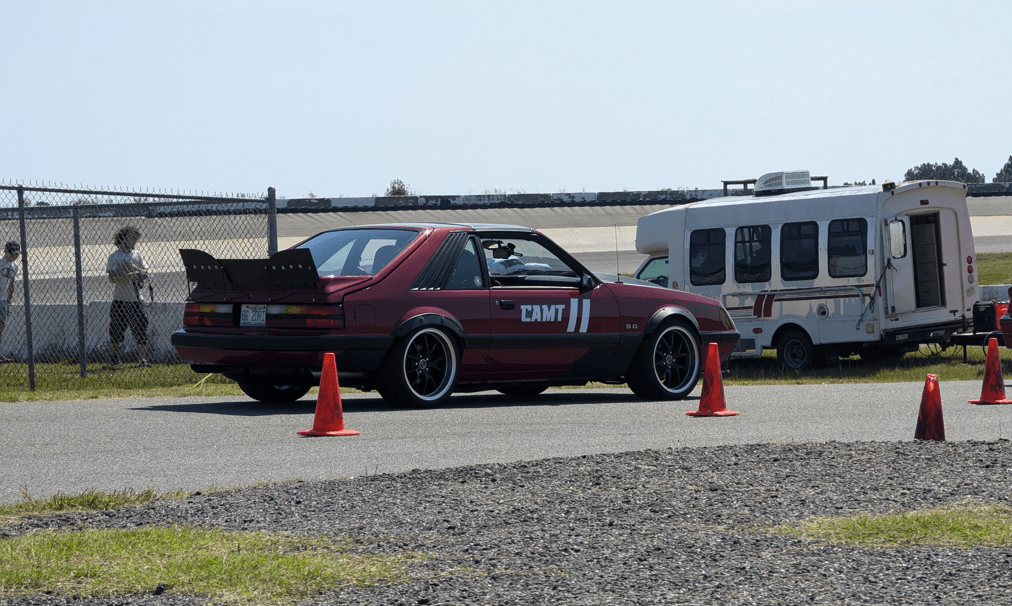
Drive your own car through a technical course laid out with traffic cones on a track or other large paved area. Cars are spaced apart from each other, speeds stay under 70 mph, and you get multiple runs to improve.
Tech Inspection
How do you know if your car will pass tech inspection at a THSCC autocross? Most cars that are in good enough condition to drive on a public road without worry are in good enough condition to autocross safely. Check this list, and if you still have any questions, email axtech@thscc.com
Annual Tech
If you are NOT a novice, you are eligible for annual tech. Print out one of these forms, inspect your car, and fill it out. On the morning of an event leave the filled out form on your drivers seat, under the windshield wiper, or somewhere else obvious. When a tech inspector comes around to check your car for the day, if you pass tech, they will sign the form and leave you an annual tech sticker. Keep the annual tech form handy at all events and place the sticker somewhere easily visible like in the lower corner of the windshield.
You can find the annual tech form Here
Regardless of whether you have annual tech, THSCC reserves the right to deem your car unsafe and not allow you to drive during an event if any tech issues are observed.
Day of Event Tech
This is a basic outline of what will be checked by the tech inspectors at an event. These are criteria that are one step below a car with absolutely no issues. THSCC reserves the right to fail a car at tech inspection or at any point during the day, at the discretion of tech inspectors and autocross VPs, for anything that is deemed unsafe, even if not explicitly stated here.
Engine Compartment
Throttle return spring functions (ignore if drive by wire).
Battery securely mounted.
Brake fluid level at recommendation.
No fluid leaks of any kind (seeping seals are okay)
Loose cables secured.
Wheels, Tires, Axles
No play beyond spec in wheel bearings, ball joints, or tie rod ends.
No concerning play or noise when pushing and pulling strongly on wheels by hand.
No cords or dry rot showing on tires, tires are not more than 6 years old.
Brake pads and rotors visibly have material.
All lug nuts present and tightened.
Interior
Brake, gas and clutch pedal travel normal, brake pedal firm when pressed.
All loose items removed from interior, nothing in center console, door pockets, etc. Attached floor mats OK, items in glove box or other compartments with latching covers OK.
No items hanging from rear view mirror.
Seats are properly and firmly attached and structurally sound.
Stock style seat belts or aftermarket harnesses are present and in good condition for any seat that will have a person in it. ( Novices must have restraints on the passenger side for an instructor)
Retractable shoulder belts lock when pulled rapidly. (doesn't apply to pendulum style retractors)
If possible, check steering wheel movement while watching for wheel movement. No excessive steering play
Exterior
Proper class and numbers on both sides of the car; Numbers at least 8” tall, letters 4” tall. Must be contrasting to car paint color.
No exterior parts or panels loose or hanging in a way that they seem likely to fall off.
Accepted Helmet Certifications (as of 2026)
SNELL:
EA2016
SA2010 - SA2015 -SA2020 - SA2025
SAH2010
M2010 - M2015 - M2020D - M2020R - M2025D - M2025R
K2010 - K2015 - K2020 - K2025
SFI:
31.1/2010 - 31.1/2015 - 31.1/2020
41.1/2010 - 41.1/2015 - 41.1/2020
FIA:
8860-2010 - 8859-2015 - 8860-2018 - 8860-2018-ABP -
8859-2020 - 8859-2024 - 8859-2024-ABP
High Center of Gravity Vehicles
Front track width must be greater than ground to roof height (track width is measured from center to center of front tires)