
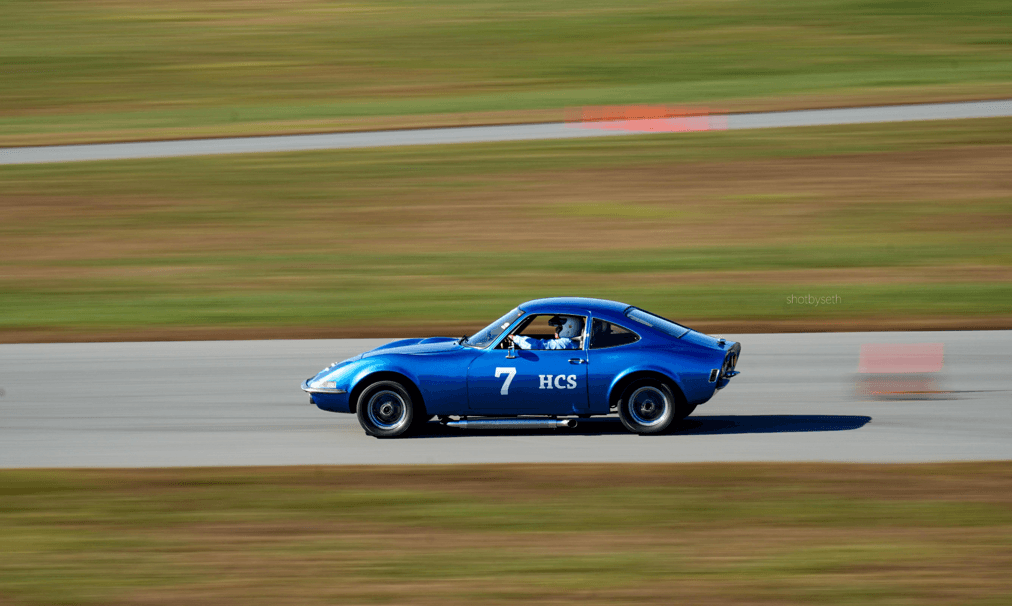
Autocross
Timed competition in your daily driver
Drive your own car through a technical course laid out with traffic cones on a track or other large paved area. Cars are spaced apart from each other, speeds stay under 70 mph, and you get multiple runs to improve.
Autocross Rules
Rules and supplementary regulations.
Rules in a Nutshell
Safety
Always follow directions from event staff. If there are rules, they are most likely in place for your and everyone’s safety.
While Working
No sitting and NO PHONES when you are working the course, you will get one warning at the drivers meeting, if you are seen with your phone out you will be sent home. Although autocross is generally safe, you need to be watching the cars on course and ready to move out of the way if something goes wrong.
Never do anything that you think is unsafe. If you see something unsafe tell a staff member.
While Driving
The speed limit for cars in paddock and grid is a walking pace, don’t drive faster than you would like to get hit by a car.
If you see a red flag, safely and quickly come to a controlled stop. Wait until a course worker tells you to continue driving.
After passing the finish line, safely slow down. Either to walking pace or the speed limit otherwise announced during the drivers meeting.
Tech and Helmets
All cars must pass tech before being allowed to run. Check https://www.thscc.com/programs/autocross/tech-inspection for more info.
All drivers must wear an approved helmet, DOT only helmets are not allowed. Check the tech inspection page for the accepted certifications.
The driver’s window, and passenger’s if there is a passenger riding along, must be rolled all the way down during a run. Exceptions may be made in cases of heavy rain.
Arms, hands, and all other body parts must be kept inside the car during a run. No hanging on to the A-Pillar with your hand.
Event Procedures
Before the start
Everyone on site must sign a waiver and receive a wristband
If you signed up online, find the registration check in sheet near the start line and check your name off before registration closes.
Prepare your car for tech inspection, pop the hood, leave it unlocked. This is how roving tech workers will know you’re ready for inspection.
Novices MUST attend the MANDATORY guided course walk. Meet at the start line at the designated time.
All drivers must attend the Driver’s meeting. This is where any event specific rules, and run/work groups will be announced.
While Driving
When in grid do what the grid worker tells you.
When at start do what the starter tells you.
Our goal is for each driver to get at least 4 runs, ideally 5.
Each cone you knock over, or that is standing completely outside of it’s chalk outline is a two second penalty.
Going the wrong way around a cone is a DNF (Did Not Finish), your time on that run will not count.
While Working
Every person who drives must work.
If you drive without working, you will not be allowed to run at the next event until you have worked twice.
When your heat is called to work, go to the worker coordinator tent to check in for your work assignment.
Classing
Autocross uses classes so you compete against cars with similar performance and modification levels.
SCCA explainer: Introduction to Autocross Classes https://www.scca.com/pages/introduction-to-autocross-classes
Unofficial but useful: SCCA Solo Classification Assistant https://www.scca-classifier.com/
You must mark your car with both the class and number you signed up to compete with.
You must have easily visible, 4” or taller letters for the class and 8” or taller numbers, using contrasting colors to your car’s paint, on both sides of your car.
If your runs are not counted because of incorrect or illegible numbers, that’s on you.
If you register on MSR with a joke name, or the wrong car, and that leads to issues with your scoring or season points, that’s on you as well.
You can print out classes and numbers and tape them to your car, here are classes and numbers.
Detailed Rules
We are unafilliated with the Sports Car Club of America (SCCA), however our rules on classing and course design are based on their Solo rules. You can read those at this link:
SCCA Solo Rules (official): https://www.scca.com/pages/solo-cars-and-rules
THSCC Autocross Rules in Full
1. | General Rules |
| ||
| 1.1. | In the case of questions regarding safety, protests, or any issue regarding general rules, the THSCC President, Autocross VPs, and Event Chairs will be involved in the decision. They may ask for input from anyone else not involved in the question. If one of them is involved in the issue, they will remove themselves from the discussion. Involved parties will be allowed to offer their input. | ||
| 1.2. | If, for some reason, disciplinary action must be taken, all club officers present at the time of the incident will decide upon the correct action. While no fines may be levied, the officers may ask the offending party(ies) (whether a competitor or spectator) to leave the present event, may ban the offending party(ies) from a number of events, or may request that the offending party(ies) never participate/be onsite again. Except in the first situation above, a special meeting will be called to more fully discuss the later options. All club officers should attend. Any club officer involved or related to the individual(s) involved will excuse themselves from the meetings. If it is decided that a person should be banned from all future events, a letter drafted by the club President will be sent to that person. The letter will contain details of why this decision was reached. The banned person may ask that this decision be reviewed annually. | ||
| 1.3. | Event Chairs will be responsible for making any decisions or clarifications regarding the running of their specific event. Event Chairs, after consulting with the Autocross VP's and club President, will determine the number of runs for the particular event. They will also determine if fun runs will be done after the event. At the discretion of the Event Chairs, in consultation with the Autocross VPs, the number of runs announced at the Drivers' Meeting may be raised or lowered during the course of the day. Announcement of the change should be made over the P.A., spread as widely among competitors are possible, and the Starter should also be asked to relate the announcement to drivers at the start line. Competitors should also help spread the word among themselves. | ||
| 1.4. | On event setup days, only Event Chairs, or drivers selected by Event Chairs, may run the course. It is desirable that the driver performing the safety preruns be someone who is not going to compete in the autocross. For NCAC events, the driver peforming the safety check should not be competing in the series. | ||
| 1.5. | No alcohol, drugs, or any controlled substances may be consumed anywhere on the site during the event. An event starts when registration opens and ends when the last run is made and the course is picked up. | ||
| 1.6. | All people who are on the site must sign the insurance waiver. This includes all participants, spectators, and crew. Participants are responsible for having their family members, crew, or friends sign the waiver and wear a wristband issued for that event, which indicates such. An announcement will be made by the Event Chairs at the Drivers' Meeting pointing out this rule. It is the responsibility of all participants to prevent anyone without a wristband from entering the course area. | ||
| 1.7. | The course may be (and should be) walked as many times as desired before the Drivers' Meeting. Only walking is allowed. This rule is intended to keep people from riding bikes, skateboards, scooters, or any other type of wheeled apparatus during the walk through. One exception, wheeled devices may be used at walking speed if they are being used as a mobility aid. | ||
|
|
|
|
2. | Eligibility of Participants | ||
| 2.1. | Participants must have a valid driver's license at the time of the event and must be prepared to present such license during registration. Learner's permits are not acceptable. | |
| 2.2. | All participants must be 18 years of age, OR if under age 18, must have a THSCC Minor Release Form signed by a parent or legal guardian. Such form is to be presented and signed off by the club President, Sr. Vice President, or an Autocross VP, then turned into the Registrar. A valid driver's license is still required. (Minor Release Forms must be kept on file with insurance waiver forms). | |
| 2.3. | THSCC reserves the right to refuse to allow anyone to participate if it is not possible to verify the above qualifications. | |
| 2.4. | Passengers under 12 years of age are not permitted in any runs on course, including fun runs. Any exceptions must be specifically approved by the club President, or in his/her absence, the highest ranking club officer present at the event. | |
| 2.5. | Non-novice participants may take along any other participant on timed runs, they may also take along spectators who have signed the ride-along waiver. Novice drivers may only take along THSCC approved instructors on timed runs; novices may not take other novices on timed runs. A novice is considered to be anyone having participated in 3 or fewer autocrosses OR still running in Novice Class. Any exceptions to these rules must be specifically approved by the President, or in his/her absence, the highest ranking club officer present at the event. | |
|
|
|
|
3. | Safety and Car Preparation | ||
| 3.1. | It is the responsibility of the driver to ensure that his/her vehicle is properly prepared and safe for competition. | |
| 3.2. | Speed through the pits will be no more than 10MPH. No tire warming, brake warming, or other high speed maneuvers will be allowed anywhere on the event sight! Pits are defined as starting at the first cone for the course and ending 20' beyond the last car, or its trailer/tow vehicle, entered in the event. Violation of these rules will be grounds for asking a competitor to leave the sight. | |
| 3.3. | All cars that have not received an annual THSCC tech inspection must pass a minimal tech inspection at each event. The inspection is to be performed by one of the THSCC Tech Inspection Crew. If the car has a THSCC Annual Tech sticker, it does not need to be teched again at the event by a THSCC Tech Inspector, as the car owner has already stated that they will be responsible for doing their own tech inspection prior to each event. If the car needs to be teched, inspection will only be done after the driver(s) have registered. Once tech inspection closes (typically 15 minutes before the Drivers' Meeting) cars will be teched as time permits. However, each driver will get the same number of runs as other competitors in class. | |
| 3.4. | Sunroofs must be securely attached to the car or completely removed from the car. | |
| 3.5. | All loose objects must be removed from the car and trunk. Spare tires may be left in if secured. | |
| 3.6. | Helmets and seat belts must be worn on every run by every person in the car. This includes fun runs and runs during setup days. | |
| 3.7. | At a minimum, the driver's window must be all the way down. Both sides is preferable. Exceptions may be made for runs made during heavy rain. | |
| 3.8. | During runs, drivers and passengers, if any, must keep arms and hands inside the car. | |
| 3.9. | Car class and numbers (of the size and type specified on this website at Car Class Letter and Number Specifications) must be displayed on both sides of the car. If a car has more than one driver, all drivers are responsible for reporting to the Starter the correct class and number. The THSCC Scoring Team will not be responsible for correcting errors that occur in scoring due to improperly marked cars or unreadable class/numbers. | |
| 3.10. | We use SCCA Guidelines on helmets. No DOT only rated helmets will be allowed. All helmets must be inspected annually by the Chief of Inspections and have a current inspection label applied on the left side. The starter will check for the label before a participant may run the course. | |
| 3.11. | Effective November 10, 2004, THSCC will have and enforce a 100 dB sound limit at all of our autocross and rallycross events. For some sites, this limit may be reduced to 95 dB, which will be indicated in the event information. All cars are subject to being tested at any place on course, and measurements will be made at approximately 50 feet from the course. Any car which is found to be in excess of the sound limit will not be allowed to start any subsequent runs. This rule is necessary to preserve our relationship with our sites. | |
|
|
|
|
4. | Preregistration | ||
| 4.1. | Licensed drivers wishing to participate should preregister and pay for an event via www.Motorsportreg.com | |
4.2. | Online preregistration usually closes at midnight the day before each event. Occasionally, extenuating circumstances require preregistration be closed earlier. Announcements via the club meeting, club forums, club email list, and/or club website will be made as soon as possible if there is to be a change to the usual preregistration deadline. | ||
| 4.3. | If you preregister for an event and later discover you will not be able to attend the event, please unregister yourself prior to the cutoff date! There is often a waiting list for the event and your unregistration will allow the first name on the waiting list to automatically move into the event. | |
| 4.4. | Refund/Cancellation Policy for preregistrants: Once registered, your payment will not be processed until after checking in on the morning of the event. If you do not attend you will not be charged. | |
| 4.5. | THSCC events are for club members only, participants must have a current, valid, annual or lifetime THSCC membership. | |
| 4.8. | Unless otherwise specified, the entry limit for THSCC events is 130 participants. THSCC is committed to giving each participant at least 4 runs per event; entry limit is assessed per event on factors e.g. site size, site layout, and amount of daylight. | |
5. | Event Day Registration | |||||||||||||||||
| 5.1. | All competitors must check in at the registration desk (usually at the start line) before registration closes. Registration Usually closes at 8:45AM. | ||||||||||||||||
| 5.2. | Competitors must be prepared to show a valid drivers license at registration. | ||||||||||||||||
| 5.3. | During registration, each driver must designate in which one class they are running for points. A driver may register for a second set of runs, subject to the following limitations:
| ||||||||||||||||
| 5.4. | SCCA®-compliant size and color car numbers and class letters are required at all events. | ||||||||||||||||
| 5.5. | Registration will be refused to anyone who has not signed the waiver and who is not wearing a wristband. | ||||||||||||||||
|
|
|
|
6. | Worker Assignments | ||
| 6.1. | Each driver must work during the event. Any driver who cannot physically work the course should check with the Worker Coordinator prior to the start of the event to see if there is a non-course worker position available. If not, they may be able to arrange with the Worker Coordinator to have someone work the course for them. Any participant who does not work will receive a DNW (Did Not Work) instead of times in the results, will not receive THSCC points for the event, and will be required to work prior to running at the next THSCC event attended. Multiple offense will result in the competitor being banned from future THSCC events. | |
| 6.2. | Only competitors entered in the event will be allowed out in the course area. Exceptions may only be made by Event Chairs, Autocross VPs, Sr. VP, or the President. | |
| |||
|
|
|
|
7. | Event Scoring and Classing | |||||||||||||||
| 7.1. | A car may only be entered in its appropriate stock, street prepared, prepared, or modified class. For example, a B street car may run in its street prepared class but not in A street. | ||||||||||||||
| 7.2. | Car classifications and bumping order will follow the SCCA® rulebook for the appropriate year. | ||||||||||||||
| 7.3. | Points are only awarded to a participant that completes at least one run. DNFs do not count as completed runs. | ||||||||||||||
| 7.4. | Five cars or five minutes minimum must exist between a competitor's runs. If a competitor is awarded a rerun, these same guidelines will also be followed. For reruns, a competitor may choose to go to the end of the line or may ask another competitor to be allowed to break into line -- as long as the 5-car/5-minute rule is followed. | ||||||||||||||
| 7.5. | Time penalties:
Did you know that very few people actually read all of these rules?
| ||||||||||||||
|
|
|
|
8. | Classes Supported | ||||||||||||||||
| 8.1. | THSCC will support the classes as defined in the current SCCA® Solo II® Rules unless otherwise published here or for a specific event. | |||||||||||||||
| 8.2. | Adult Kart classes are allowed, however, no Junior karts will be allowed. | |||||||||||||||
| 8.3. | Classes supported by THSCC and which are scored using the current RTP/PAX index include the following:
| |||||||||||||||
|
|
|
|
9. | Handling Aborted Runs and DNFs | ||
| 9.1. | A car that starts its run but does not or is unable to complete the entire course will be scored a DNF for that run. Once a car crosses the start line, the run is officially started. In other words, a car that is in the start box, starts to move forward when given the OK by the Starter but brakes before crossing the start line has not officially started a run and will not be given a DNF. Once the car crosses the finish line the run is over. (This last part seems obvious but it is intended to clarify any situation where it is possible to hit the finish line before finishing the course. For instance, miss a turn and wind up unintentionally in the finish box.). Chances are that a novice will ask you something you don't know the answer to unless you read all of the rules. | |
| 9.2. | If, during a run, a participant sees a cone out of place, they must bring the car safely to a stop on course and point out the cone or cones. After this is done and the course worker acknowledges this, the participant will drive to the finish line as specified in the rerun rules. The participant will be issued a rerun. This rule does not apply to a cone moved by that driver during an earlier part of his/her same run (i.e. on sections of the course that a driver must cover twice during a single run). | |
| 9.3. | If a cone is knocked down by a driver on the first pass of a section of the course that is used second time on the same run, and the cone has not been reset by a course worker due to insufficient time between the two passings of the same car, no rerun will be issued. In this case, the competitor will drive the line that was originally marked by the cone. No extra cone penalty will be given if the downed cone is hit because it is in the line. The reason for this rule is to keep a competitor from gaining an advantage because of a knocked down cone and to protect the course workers. | |
| 9.4. | For a timer malfunction or other situation resulting in a rerun, the car on course should be red flagged as soon as is safe and possible. The car should proceed at reduced (but not creeping) speed in as direct a manner as possible to the finish line without following the course. | |
| 9.5. | A car that is red flagged for a safety issue will be given a rerun. Safety should always be the primary consideration by all course workers. If a competitor's car develops a mechanical problem that may cause a safety problem, even if the car is capable of finishing the run, the driver should be red flagged. Because the red flag was for a safety problem and NOT the mechanical problem, the competitor will get the rerun. | |
| 9.6. | Anyone damaging the timing equipment or hitting the large cones by the timing equipment will be given a DNF for that run and will be responsible for the costs of replacing/repairing the equipment. | |
|
|
|
|
10. | Season Points and Trophies | |||||||||||||||||
|
The final rule is that you must have a great time!
Now, did you really read all of this information or did you merely skip to the end? If you skipped right to the end, do yourself a favor and go back and read everything. Trust us; there's actually some useful information here and it'll help make your total event experience with THSCC go much more smoothly.